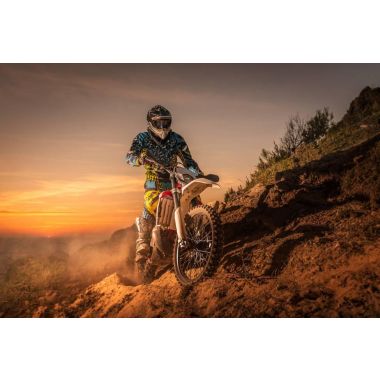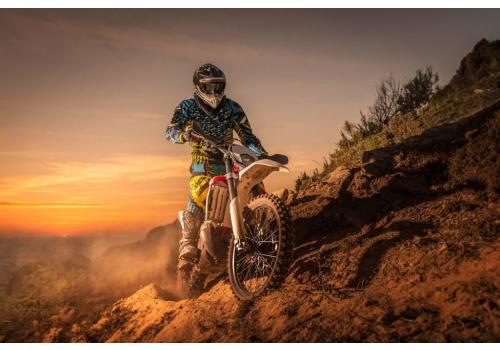
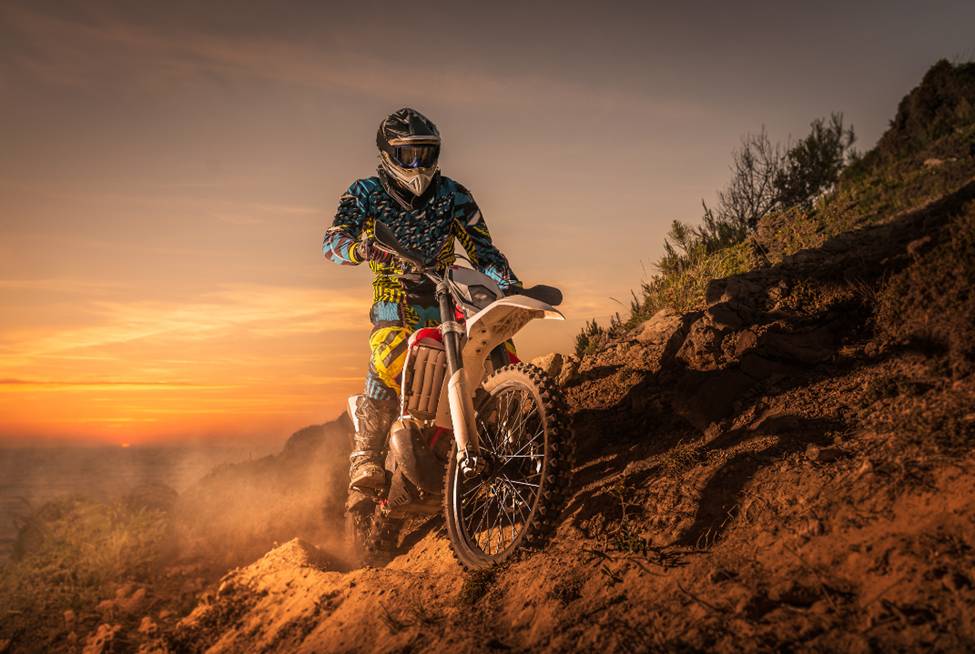
Enduro racing is one of the most exciting motorsports around!
Enduro racing was built on motocross, but it has evolved into a very different kind of event. Motocross is still an incredible sport, but enduro is gaining popularity every year. That’s because enduro races are full of excitement, risk, and skill.
What is enduro, and how does it differ from other motorcycle sports like motocross? Let’s go over the basics.
What is an Enduro Race?
For the most basic understanding of enduro racing, think about combining motocross + endurance.
Instead of racing for about 40 minutes like a motocross rider, enduro athletes race for 75–150 miles, mostly in the woods, although sometimes they end up on public roads, too. It’s typical for races to last between 5 and 7 hours.
Every minute, a “row” or “minute” of riders starts the race. This keeps the trail from getting overcrowded. Often, friends ride together in a row, even if they’re in totally different classes. There is no need for the row to be limited to riders in the same racing class.
Riders clear checkpoints along the way and loop back around to the original starting point.
Note: In addition to enduro racing as a motorsport, there are also enduro-style mountain biking competitions and EnduroCross races, which are held inside.
Scoring an Enduro Race
There are two ways to score an enduro race. Option 1 is to use traditional time-keeping, and option 2 is called “start-control/restart.”
Traditional time-keeping is the longest-lasting form of enduro racing. Because this type of race often includes portions of the trail that are on public roads, enduro bikes must be street legal and registered accordingly. The rider also needs a motorcycle endorsement.
Riders earn points by checking into each checkpoint as close as possible to the minute they are expected to arrive. If you arrive early, you get a penalty. Arriving late is also penalized.
Enduro athletes have to ride fast but also avoid arriving too early to a checkpoint. They are constantly keeping track of time and calculating how long it should take for them to cross each section of the course.
Start-control/Restart is a bit simpler: there is no penalty for arriving at a checkpoint early. You check and check out at set points throughout the trail’s many closed-course sections.
The end checkpoint for each section is the start of the next section. Arriving early doesn’t lead to a penalty, but the rider will need to wait until they are given permission to start the next section.
The AMA National Enduro Championship Series races in this format. Some enduro racers prefer start-control/restart because they don’t have to worry about personal timekeeping during the race.
What Makes Enduro Racing So Exciting?
People who love enduro racing really love enduro racing. Why? What makes enduro racing so great?
1) It’s exciting! Riding in an enduro race is a huge challenge, but it’s never without excitement and on-the-course drama. The course is long and difficult, and there is something incredible about completing this kind of mental and athletic challenge!
2) It’s really cool that everyone rides the exact same course. Brand new riders get to tackle the exact same trail as seasoned riders with tons of experience. In fact, since each minute or row can be made up of people in different classes, people get to race enduro with their friends.
3) Because the minute is made up of people from different classes, people in the same row usually aren’t competing against each other. This means that more experienced riders are usually willing to help newer riders learn the ropes. It’s a cool way to build relationships and learn a lot about racing.
What is an Enduro Motorcycle?
Enduro doesn’t just use a different format than traditional motocross. The bikes themselves are also different. They look similar, especially to someone who doesn’t have a lot of experience with motorsports, but there are several key differences.
- Weight: Enduro bikes are heavier. They require additional components to maintain their street legality.
- Lights: Motocross races take place during the daylight hours, and the bike doesn’t need to be street legal, so a motocross bike doesn’t need any lights. You can add a lighting kit if you want, but it’s not a requirement for the bike. Enduro bikes, on the other hand, have both front and rear lights.
- Other Street Features: An enduro bike will include brake lights, rev counter, speedometer, brake light switches, a horn, a license plate holder, turn signals, an ignition barrel, kickstand, and hand guards.
- Fuel Tank: The enduro bike’s fuel tank is larger than a motocross bike. More fuel is used in a multi-hour race. The tank must pass any emissions tests as well.
- Exhaust System: The required street legal exhaust system will reduce the amount of noise made by your enduro bike.
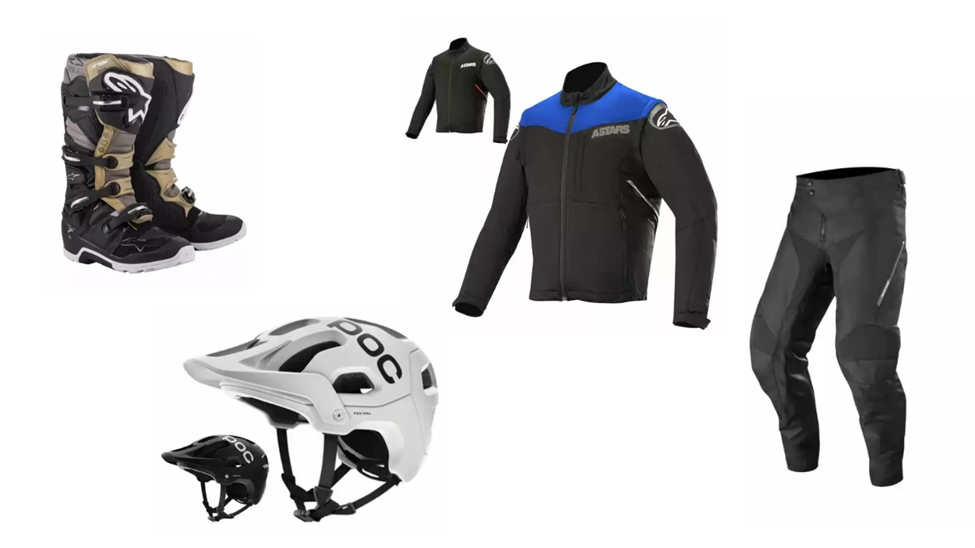
Getting Started with Enduro
If you want to get started as an enduro racer, you’re going to need more than a bike. You’re also going to need the right gear.
There’s a lot of overlap between motocross gear and enduro gear, but you do need a few special items.
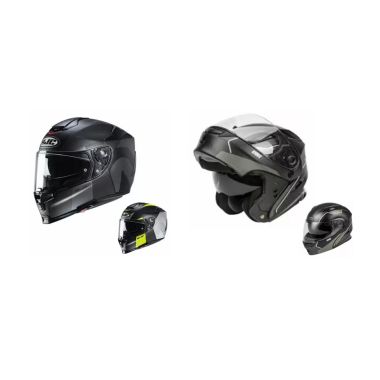
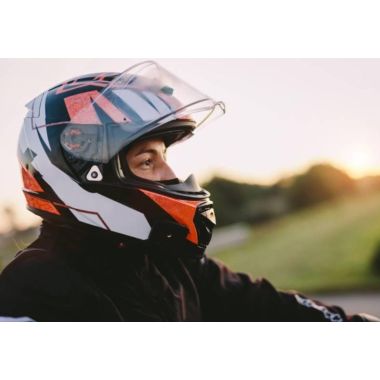
- Helmet
- Goggles/eye protection
- Jacket
- Pants or riding suit
- Comfortable, durable, waterproof footwear
- A stopwatch to keep track of your time to avoid finishing too early or too late
- An odometer so that you know how much longer you have in each section — that way you can time it right!
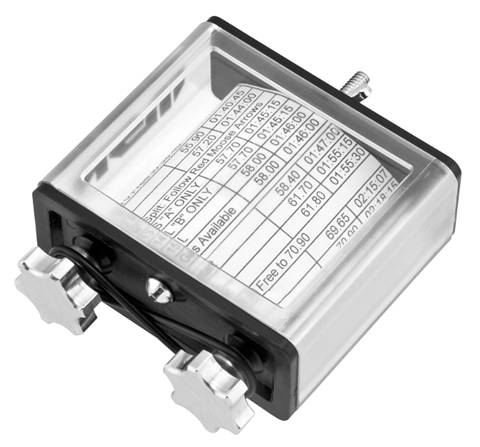
- A roll chart holder for keeping track of the route
- A water bottle or hydration system to keep yourself hydrated for hours on the bike
If you’re already riding motocross, then the only things you will probably need to get are the stopwatch, odometer, and roll chart holder!
If you already enjoy motocross, enduro might be the next motorsport for you to try! You can use your established skills as a motocross rider and increase your stamina and endurance to race in an exciting and elite motorsport.
Enduro is a great competitive sport, but it’s also really fun. Many riders are there for the great ride, not the competition. Whatever your reason for taking up enduro, we’re confident you’ll love it.