
There’s really no debate: motorcycles are more dangerous than cars.
But how much more dangerous are they? And are there ways to make your motorcycle riding experience safer?
Many of us love riding our bikes because of the freedom it gives us. There’s nothing quite like getting on the open road. But how much risk are you taking on by doing this thing that you love?
The Facts: How Dangerous Are Motorcycles, Really?
Unfortunately, motorcyclists make up a disproportionate number of traffic fatalities.
In 2020, 5,579 motorcyclists were killed on the road. Numbers for 2021 haven’t been released yet, but some estimates place the number over 6,000.
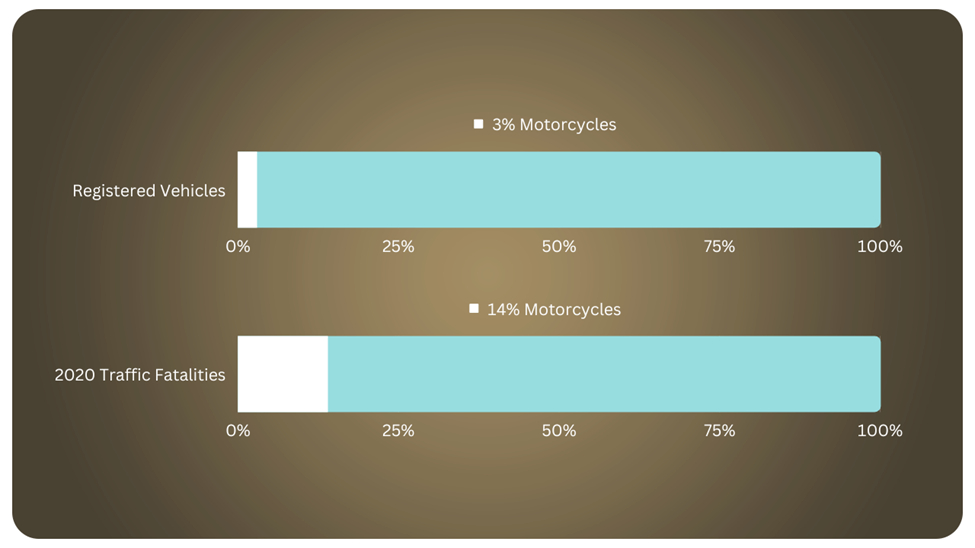
How much more dangerous are motorcycles than cars? Well, only 3% of all registered vehicles in the United States are motorcycles. Even so, they accounted for 14% of 2020’s traffic fatalities and 4% of injuries .
Some additional statistics include:
- Motorcyclist fatalities are on the rise. From 2019 to 2020, there was an 11% increase.
- Over the past 10 years, there has been a 20% increase in the number of motorcyclist fatalities.
- Motorcyclists also make up a higher percentage of fatal alcohol-related accidents than any other kind of driver.
Motorcycle risk by state
Some states are more dangerous than others.
To calculate how risky it is to ride a motorcycle in a certain state, you can’t just look at the total number of motorcycle fatalities in that state. A state with a much larger population will have more motorcycle deaths, but that doesn’t necessarily make it the riskiest state.

Here’s an example: California had 539 motorcycle fatalities in 2020. Out of every 10,000 motorcycles in the state, there were only 6 fatalities. That places California squarely in the middle of the list when it comes to risk.
Mississippi, on the other hand, had 62 fatalities in 2020, but that means that there were 12 fatal accidents per 10,000 motorcycles. Mississippi was the most dangerous state for motorcyclists that year.
As of 2020, the 10 highest-risk states are:
- Mississippi (12 fatalities per 10k motorcycles)
- Texas (12 per 10k)
- Arkansas (11 per 10k)
- Florida (10 per 10k)
- Louisiana (9 per 10k)
- South Carolina (9 per 10k)
- Missouri (9 per 10k)
- Tennessee (9 per 10k)
- Georgia (9 per 10k)
- North Carolina (8 per 10k)
The safest states are Alaska (2 fatalities per 10k motorcycles) and New Hampshire (3 fatalities per 10k).
High-Risk Behaviors for Motorcyclists
Regardless of where you’re riding, some behaviors are riskier than others.
How dangerous are motorcycles when the rider participates in these behaviors? Very dangerous.
Avoiding these high-risk behaviors is one of the best ways to stay safe on the road.
Driving under the influence
Out of the 5,000+ motorcyclists killed on the road in 2020, 27% of them were drunk and had a blood alcohol content (BAC) of 0.08 or higher.
That percentage is also important because it means motorcyclists had the highest rates of drunk driving when compared to all other types of vehicles.
Riders between the ages of 45 and 49 were the most represented in drunk-driving motorcycle fatalities, making up 35% of the total number of intoxicated driving fatalities.
Speeding
34% of the motorcycle accidents in 2020 involved speeding. By contrast, only 29% of fatal car accidents that year involved speeding.
While speeding is definitely a safety issue, note that the majority of fatal motorcycle accidents in 2020 did not involve speeding.
Age plays a factor, too. 45% of motorcyclists killed while speeding were between the ages of 25 and 29.
Not wearing a helmet
Here’s some good news: a majority of motorcycle operators wear helmets, and helmet use is generally trending upward over the past 20 years.
Unfortunately, more than 25% of motorcyclists in the U.S. still ride without a helmet. In fact, in 2021, helmet use dipped to 64.9%.
Motorcycle helmets protect us from serious injuries and death. Some data from 2017 proves it:
- 1,872 motorcyclists were saved by wearing a helmet in 2017.
- 749 motorcycle fatalities could have been prevented by helmets that year.
- Wearing a helmet effectively prevents death at a rate of 37% for riders and 41% for passengers.
- Helmet use doesn’t just reduce fatality risk; it also reduces the risk of head injury at a rate of 69%.
States that have laws requiring everyone to wear a helmet while operating a motorcycle have lower fatality rates. Between 1999 and 2019, states with helmet laws had 33% fewer fatalities than states without helmet laws or with weak helmet laws.
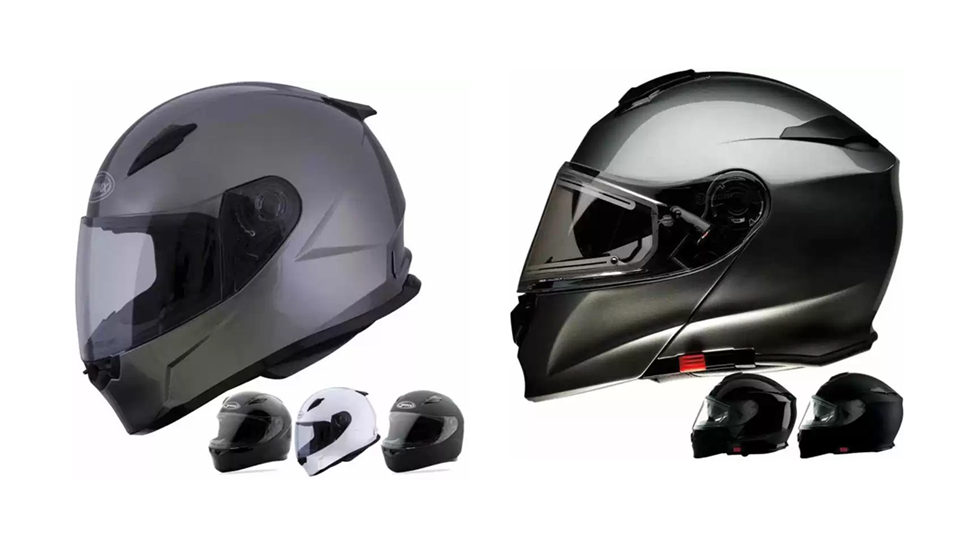
Photo Attribute: Images from MxMegastore
Alt: Variety of motorcycle helmets
How dangerous are motorcycles at low speeds?
If speeding is a factor in many accidents, does that mean riding at lower speeds is safer?
A frequently cited 1980s study found that the median speed of motorcycle accidents was only 29.8 mph.
Does this mean that 29.8 mph is the most dangerous speed for motorcyclists? No, because motorcycle accidents become more serious as the speed increases. A faster crash is still a more dangerous crash.
How to Stay Safe on the Road
Riding motorcycles can be fun, thrilling, and freeing. It’s also risky.
We all want to come home safely to our friends and family at the end of the ride, and there are ways we can make that happen.
Here are the 5 things you can do to stay safe on the road:
- Always wear a helmet, even if your state doesn’t require it.

- Follow the rules of the road, including speed limits and safety signs.

- Avoid distracted driving. Unfortunately, other drivers are a risk to motorcyclists, too, so you should pay attention to other drivers on the road, who may be distracted or inattentive.

- Wear appropriate motorcycle gear, including gloves, eye protection, and a
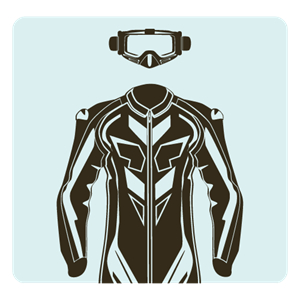
- Never get on the bike when you have been drinking.

Riding a motorcycle offers a unique experience of joy and freedom, but you have to take the risks seriously. Ride smart and with the proper gear, and you can enjoy the road for many happy years.