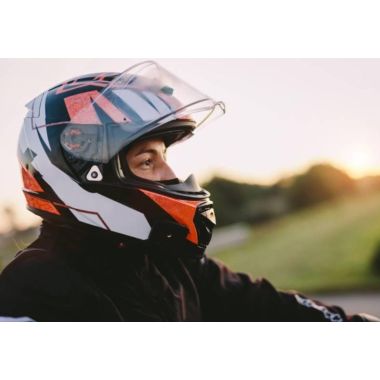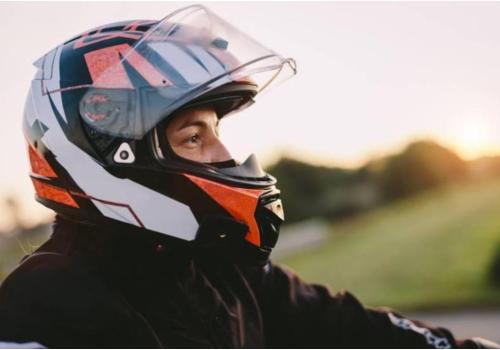
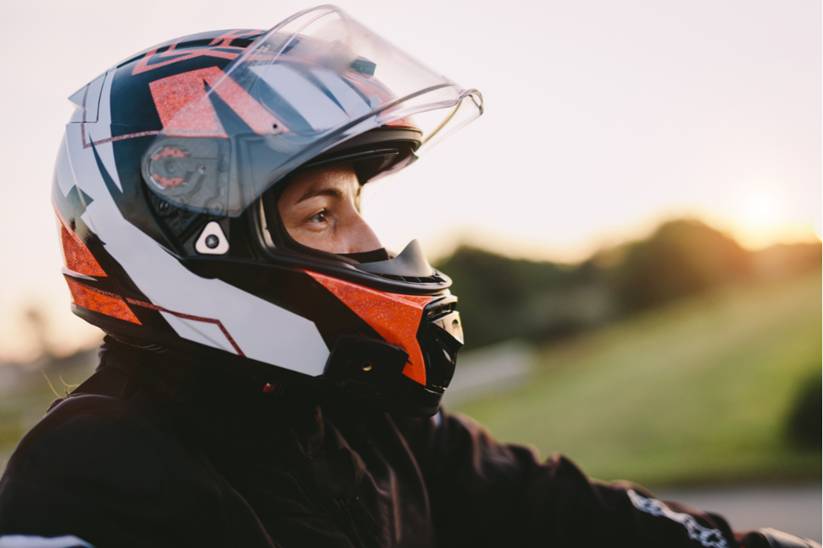
It’s important to have the proper gear when you ride. When it comes to choosing and fitting a motorcycle helmet, remember that this is the most important piece of equipment to get right. When you have an accident while wearing a good helmet, the helmet takes the hit for you. So, buying a well-rated helmet that fits properly is not only a good choice — it could be a life-saving one as well.
This is your ultimate guide to how to size and buy a motorcycle helmet.
What to Look for in a Motorcycle Helmet
There are several features to look for when it comes to safety and protection in a motorcycle helmet. When you have all of these bases covered, you can be sure you’re riding smart.
UV Protection
Exposure to UV rays — UVB rays in particular — can cause sunburn, which can lead to skin cancer, including melanoma. If you are covered head-to-toe in gear, you may assume you are protected from the sun’s rays, but this is not necessarily true.
So how can you prevent sun damage?
Fortunately, protecting yourself from dangerous UV rays while riding is easy. You should always wear sunscreen, and be sure to either wear protective eyewear or choose a helmet with a UV visor.
Check Safety Ratings
The National Highway Traffic Safety Administration (NHTSA) estimates that motorcycle helmets reduce the likelihood of a crash fatality by 37%. But it’s critical to make sure that the helmet you buy is tested and vetted for collision.
DOT sticker
The first thing to look for is an official Department of Transportation (DOT) sticker on your helmet. The DOT sticker means that the helmet meets Federal Motor Vehicle Safety Standard (FMVSS) 218. This standard assures that the helmet protects the head and brain in the event of an accident.
Snell or ANSI label
In addition to the DOT sticker, if the helmet has a Snell Foundation or American National Standards Institute (ANSI) label, you have extra assurance that the helmet has been vetted for crash safety.
In most states, any DOT-approved motorcycle helmet is enough to satisfy a helmet law. If you’re wondering what the laws in your state are, you can find the Insurance Institute for Highway Safety (IIHS)’s Motorcycle helmet use laws by state here.
Bluetooth headset communication system
Of course, this is a next-level luxury feature and not a safety requirement, but some helmets feature a bluetooth headset communication system. These helmets work on voice prompts and voice commands for emergency communication, as well as simply receiving calls, playing music, and controlling noise.
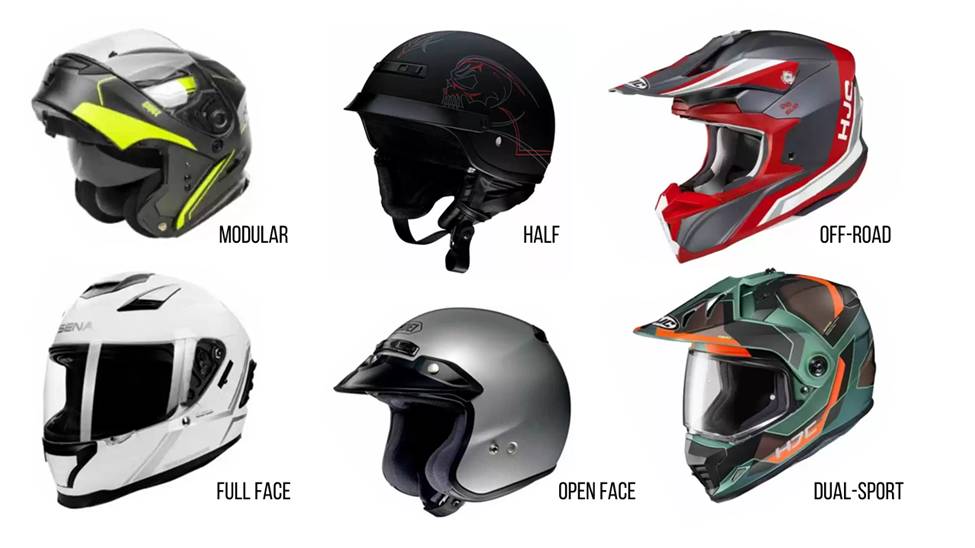
Choosing the Best Helmet
Helmet style
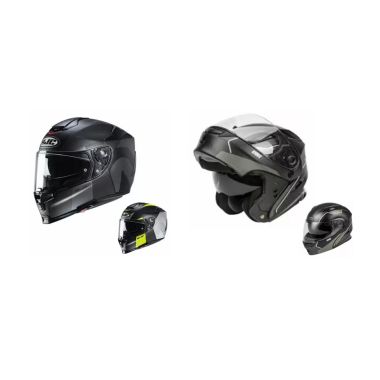
When it comes to helmet style, you have several options. These are the different styles, and features associated with each style:
Full-face motorcycle helmet
- Excellent head and neck coverage
- Aerodynamic features
- Comfortable
- Good ventilation
- Has a chin bar which protects your chin and jaw
Modular flip-up helmet
- Can be open-face or full-face
- Common with adventure dual-sport riders
- Good airflow and keeps dust and dirt out of your face
- Chin protection
Half helmet and open face (¾) helmet
- Lighter helmet
- Face is exposed
- No chin guard, which increases safety risk
- Significant wind noise
- No weather or road debris protection
Dual-sport helmet
- Traditional models: Extended chin bar and visor, no eye protection (goggles are required)
- Newer models may have integrated face shields
- Good for all types of weather conditions and off-road adventures
Off-road (dirt bike, motocross, or MX) helmet
- Extended chin bar and visor, require goggles
- Good for motocross and other off-road activities
- Good airflow
- No Bluetooth capability
For a more in-depth look at full-face vs. modular helmets, see our guide .
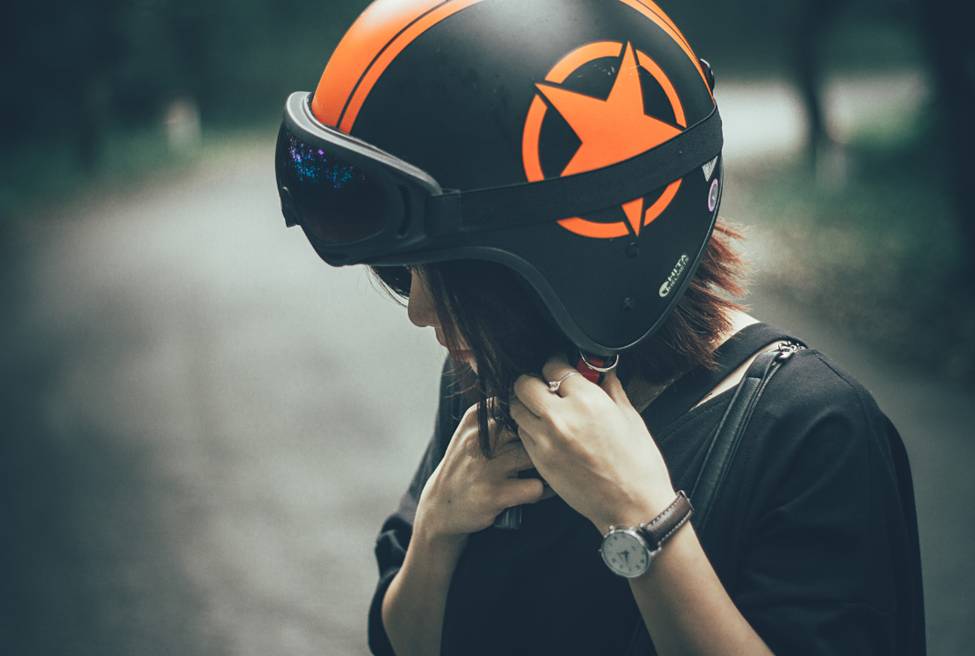
Fitting Your Motorcycle Helmet
Finding the right size
When it comes to fitting a motorcycle helmet, you may find a bargain online or inherit a helmet from a friend, but beware — getting the size right is critical.
Why is this, you may be wondering?
If a helmet is too large, it can come off in a crash. It can also slam into your head on impact, so rather than cushioning you properly, it compounds the crash effect and can cause serious head injuries.
If a helmet is too small, it can make your ride miserable, and even dangerous. You may get headaches and experience double vision, which is distracting and unsafe.
Shape
Not all heads are shaped alike! And neither are motorcycle helmets. You should determine the general shape of your head before you begin your search for the perfect helmet. Use a mirror, or have someone close to you look down on your head from the top to determine your head shape. The three basic helmet shapes are:
- Long Oval
- Intermediate Oval (the most common)
- Round Oval
Measuring your head
When measuring your head, use a soft measuring tape. Start it just above your eyebrows and bring it around the thickest point in the back of your head. Cross-reference your measurements with a helmet size chart.
How do you know you have the right motorcycle helmet fit? A helmet should fit snugly. If it is too loose, it will move around. A properly fitted helmet will be a little tight, providing even pressure without uncomfortable pressure points. When you shake your head, the helmet should not jiggle or move.
Follow these steps to make sure the helmet you are trying on fits properly:
- Secure the chin strap so you can fit no more than two fingers between the helmet and your jaw. Hold the chin bar and push the helmet from side to side. The helmet lining and cheek pads should be in direct contact with your skin at all times.
- Place one hand on the back of your helmet and push forward. Use the other hand to try and slip your finger in front, just above your eyebrow line. If there’s room for more than just the tip of your finger, the helmet is too large.
- With the chin strap secured, place one hand on the chin bar and push up. Then, place one hand on the back and push up again. If the helmet rolls off your head, it is too big.
- Lastly, try and sit in your helmet for at least 30 minutes to make sure it fits well in all the right places. Ensure there are no pressure points before heading out on a ride.

How to make a motorcycle helmet fit better
Some motorcycle helmet manufacturers provide replaceable cheek pads and liners that let you customize and adjust the shape and fit of the helmet.
If you bought a helmet online that doesn’t fit, the best option is to return it right away. The inconvenience will be worth it when you get a properly-fitting helmet. Second-best is to try replacement pads to see if you can get the right fit.
Beware of Unsafe Helmets
Novelty helmets may look cool, but beware, they may not be safe. Also, there are certain unscrupulous vendors to look out for who will put a fake DOT label on their product to fool customers.
If you are unsure of whether a helmet is okay, the following are some tips from NHTSA that can help you identify safe helmets from unsafe helmets.
- Unsafe helmets will be thin, lacking a stiff foam inner lining.
- Unsafe helmets may have plastic buckles on the chin strap that can easily break on impact.
- Depending on design, unsafe helmets may be very light. DOT helmets generally weigh about 3 pounds.
- The German Army or skullcap-style helmet is commonly considered unsafe because it is smaller and thinner than DOT helmets.
Whether you’re a weekend warrior or a daily rider, nothing is better than feeling the joy and independence of getting out on your bike. But remember, the only thing between you and the road is your gear, so stay safe and always protect your head first with a quality helmet. When it comes to , Mx Megastore has you covered! And you can rest assured that every single one of our helmets is DOT-certified for safety.